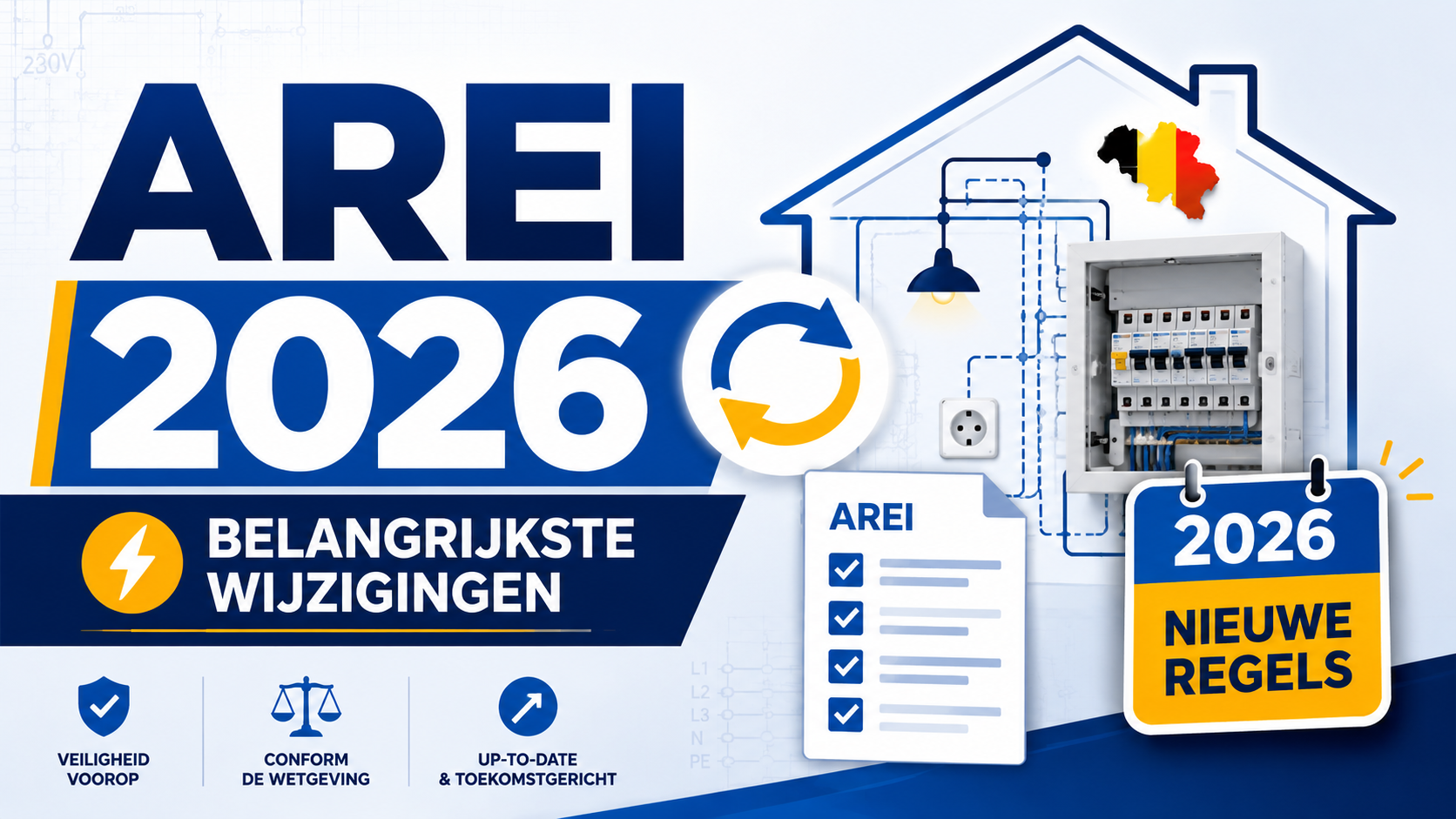
The AREI (the Belgian General Regulation on Electrical Installations) sets out how electrical installations are safely designed, built and inspected in Belgium. Since the major recodification, the regulation has been split into three books and continues to evolve. In this article we review the key points of the most recent version and what they mean for your diagrams.

The key points of attention
A clear three-book structure — domestic installations (Book 1), transport and distribution (Book 2) and non-domestic installations (Book 3) are clearly separated.
Diagrams and documentation — a correct single-line diagram and position diagram remain mandatory parts of the installation file.
Charging infrastructure for electric vehicles — extra attention to the connection and protection of charging points.
Residual-current protection — stricter application of RCDs for the protection of persons.
Periodic inspection — clear rules on inspection, including when a home is sold.
What does this mean for you?
For installers this means that files must be complete and up to date before the inspection. For owners it is important to know that a compliant installation and a correct diagram are decisive when selling, renovating or extending. So start updating your diagrams in good time.
How Voltuno helps
With the Voltuno editor you draw a correct single-line diagram, position diagram and bill of materials in minutes — multilingual and always aligned with the applicable requirements. That keeps your files compliant with ease.
Please note: this article is a general explanation and not legal advice. Always consult the official, consolidated text of the AREI (FPS Economy) for the exact obligations in force.